
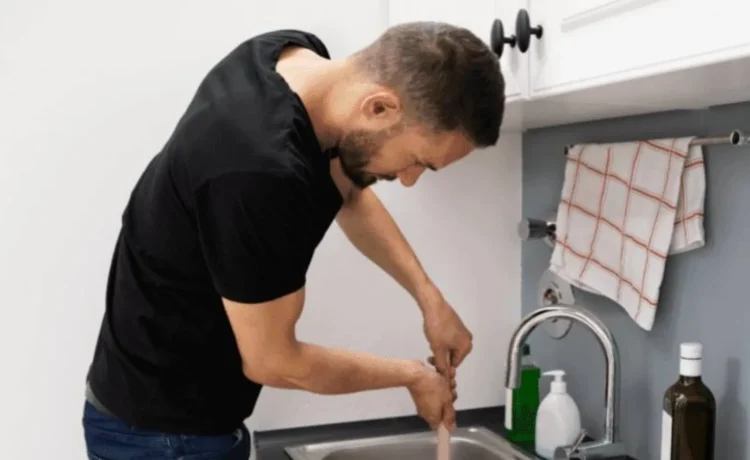
If you’ve noticed issues with how quickly water drains from your kitchen sink, it could mean you have a drainage problem. This may be very minor and easy to fix like a clog, or it could be a more serious issue that’s built up over time.
In older homes in particular, a common drainage problem is a buildup of fat, scale (hard mineral deposits), and other residue inside pipes and drains. This gradually shrinks the internal space of your drains, slowing down the flow of water. If it reaches a certain level, a blockage can happen, where water doesn’t flow at all and perhaps even starts backing up into your sinks and other fixtures.
The best way to fix this is with drain cleaning. But can it get rid of fat and scale build-up completely, and is it a job you can do yourself? Read on for everything you need to know.
DIY vs. professional drain cleaning
There are a number of DIY drain cleaning methods you can try if you have a blocked or slow-draining sink.
Here are just a few:
- Use a drain rod or snake – these are long, flexible tools used to break up blockages, but they won’t do anything to get rid of fat or scale build-up on the inside of pipes
- Pour boiling water down the drain – this can be effective at dissolving a certain amount of grease, fat and oil that has accumulated in the pipes, as well as for clearing some clogs
- Pour a mixture of baking soda and vinegar down the drain – similarly to using boiling water, this can dislodge some blockages and dissolve some residue.
The use of chemical drain unblocking products is best avoided, however. They can be toxic and harmful to health, and can potentially damage your pipework. Plus, they may not actually do anything to get rid of the buildup of grease or scale inside the pipes.
If you’ve tried some of the methods above and are still having problems, this could indicate a more extensive issue. It’s likely that the buildup has been happening over a number of years, making it harder to address with DIY methods and perhaps also further along the drainage system than you’re able to access.
In this case, it’s best to call in the experts, who can carry out professional drain descaling for long-term flow improvements. You can go straight to this step if you prefer, as it is almost always the quickest and most effective way to resolve plumbing and drainage issues.
What happens during professional drain cleaning?
The most common method used by the experts to clean drains is high-pressure water jetting. This is a highly effective way to clear blockages and remove scale, dirt and any other buildup of residue.
For more stubborn problems such as scale, other techniques may be needed. Drainage specialists can use mechanical descaling tools, along with specialist chemical treatments, to dissolve and loosen the mineral deposits. A combination of these methods should be able to restore the drain back to full-flowing functionality.
How to avoid future problems with preventative drain care
To help prevent future issues with buildup in your drains – or at least slow down how quickly it happens – you can follow these best-practice drain care tips:
- Never pour cooking fat or oil down the drain – instead, wait for it to cool and solidify before disposing of it in the general waste bin. Alternatively, you can find out if your local authority offers any recycling facilities for cooking oil.
- Consider installing a water softener if you live in a hard water area – this could potentially help to reduce scale build-up.
- Use drain strainers or traps to catch grease and food before they enter the drain.
